
Quick answer
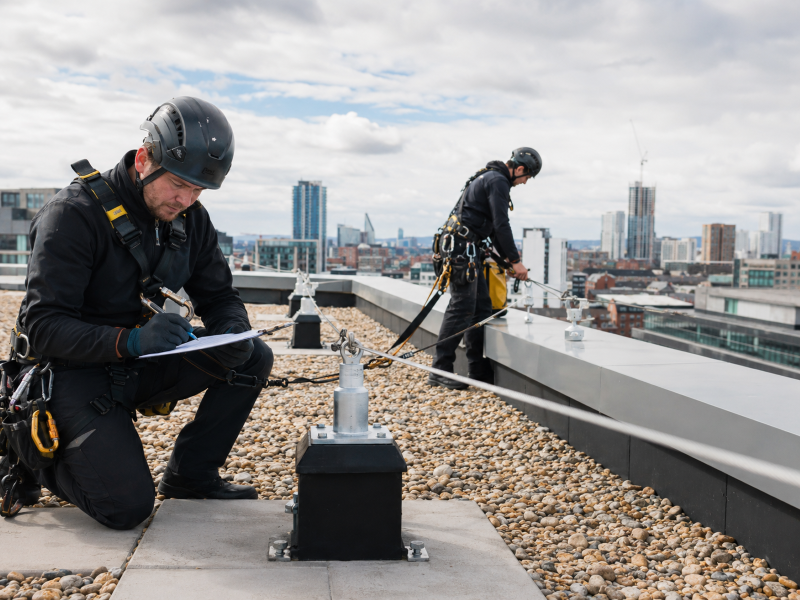
A rope access company can help facilities managers and building managers improve fall protection compliance by inspecting roof access risks, reviewing existing anchor points, identifying gaps in roof safety systems, supporting fall protection installation and helping maintain safer access for future contractors. For commercial buildings, fall protection should not be treated as a one-off installation. It should form part of a planned inspection, maintenance and evidence-led safety strategy.
Why fall protection compliance matters for commercial buildings
Commercial buildings often require regular access to roofs, plant areas, gutters, façades, skylights, rooflines, ventilation systems, solar equipment and high-level assets.
Every time a contractor, surveyor, maintenance operative or facilities team member needs to work at height, the building must be assessed for safe access. If fall protection systems are missing, poorly located, damaged, undocumented or unsuitable for the task, routine maintenance can become difficult, delayed or unsafe.
This is where a rope access company can provide practical support.
Instead of looking at fall protection as a separate compliance item, rope access teams can assess how people actually move around the building, where high-risk areas exist and what systems are needed to support safer inspection and maintenance.
For facilities managers, the priority is not only installing equipment. It is ensuring the building has a usable, documented and maintainable fall protection strategy.
Why facilities managers should review fall protection systems
Fall protection systems can become overlooked once installed. However, commercial buildings change over time.
Plant may be added
Roof routes may be altered
Access requirements may increase
Contractors may need to reach new areas
Anchor points may no longer suit the task
Older systems may lack clear documentation
Roof surfaces may deteriorate
Building users may create new access demands
A rope access company can help facilities teams review whether existing fall protection arrangements still match the way the building is used.
This is especially important for:
- Office buildings
- Hotels
- Residential blocks
- Healthcare estates
- Education buildings
- Retail and leisure sites
- Industrial premises
- Mixed-use developments
- Public sector buildings
- Commercial landlords and managing agents
If a building has regular roof or high-level maintenance needs, fall protection should be part of the planned maintenance strategy rather than a reactive concern.
How to use a rope access company for fall protection compliance
1 Start with a working at height access audit
The first step is to understand where people need to work at height and why.
A rope access company can help assess:
- Roof access points
- Plant areas
- Gutter routes
- Parapet edges
- Skylights and fragile surfaces
- Roof hatches
- Ladder access
- Façade maintenance zones
- High-level drainage areas
- Ventilation and ductwork access points
- Anchor point locations
- Areas where contractors currently improvise access
This audit should focus on real building activity. It should consider who accesses the roof, how often they attend, what tasks they carry out and whether the current access route supports safe working.
For facilities managers this creates a clearer picture of where fall protection systems are needed and whether existing arrangements remain suitable.
2 Review existing anchor points and mansafe systems
Many commercial buildings already have anchor points, lifeline systems or other fall protection equipment in place. However, the presence of equipment does not automatically mean the system is suitable for every task.
A rope access company can help review:
- Anchor point positioning
- Condition of visible fixings
- Mansafe line routes
- System layout
- Access limitations
- User practicality
- Tagging or inspection status
- Compatibility with required tasks
- Gaps in coverage
- Areas where users may still be exposed
This review can help identify whether the system gives contractors practical protection where they actually need to work.
For example, a roof may have anchor points installed, but they may not support safe access to a gutter line, plant zone, façade edge or roof-mounted equipment. In that case, the building may need further assessment, maintenance or additional fall protection measures.
3 Identify missing or unsuitable fall protection
A fall protection review should not only confirm what exists. It should identify what is missing.
Common issues may include:
- No safe access to roof plant
- No fall protection near fragile surfaces
- Insufficient protection near roof edges
- Poor access to gutters and drainage points
- Anchor points in impractical locations
- Lack of clear inspection records
- Damaged or corroded components
- Missing signage
- Unclear user instructions
- No planned maintenance schedule
A rope access company can help translate these findings into practical recommendations.
This may include installing new anchor points, adjusting access routes, reviewing work restraint options, improving inspection arrangements or planning a wider roof safety upgrade.
The aim is to remove uncertainty before future contractors arrive on site.
4 Plan fall protection installation around the building
Fall protection installation needs careful planning. Systems must suit the building structure, maintenance tasks, user movement and future access requirements.
A rope access company can support installation planning by considering:
- Building layout
- Roof materials
- Structural suitability
- Plant locations
- Edge risks
- Access frequency
- Rescue planning
- Future maintenance tasks
- Contractor access routes
- Interaction with other roof systems
Where suitable, rope access techniques can help technicians install or access difficult areas without relying on large scaffold structures or disruptive access equipment.
For commercial buildings, this can be particularly useful where roof edges, façades, service zones or high-level structures are difficult to reach by traditional means.
5 Build fall protection into routine maintenance
Fall protection systems need ongoing attention. They should not be installed and then forgotten.
A rope access company can help facilities managers build fall protection into a planned maintenance programme.
This may include:
- Routine visual checks
- Formal inspections by competent persons
- Maintenance recommendations
- Review of access changes
- Reporting damaged components
- Checking signage and user information
- Reviewing rescue arrangements
- Documenting limitations
- Recommending remedial works
- Keeping records for facilities files
Inspection frequency should be based on the system type, manufacturer guidance, site conditions, use and competent assessment. The key is that the building manager has a clear process for keeping safety systems under review.
6 Link fall protection to wider rope access maintenance
Fall protection often connects directly to other commercial building maintenance tasks.
A rope access company can help facilities teams combine fall protection reviews with other difficult-access works, including:
- Façade inspections
- Gutter and drainage checks
- Roofline inspections
- Cladding checks
- Building condition surveys
- Ventilation access reviews
- Ductwork and riser inspections
- Bird control assessments
- High-level cleaning
- Minor external repairs
This joined-up approach can make each visit more valuable. Instead of treating roof safety, building maintenance and compliance inspections as separate exercises, facilities managers can build a more coordinated access strategy.
For commercial buildings, this can reduce repeat mobilisation, improve reporting and help identify risks earlier.
7 Request photographic reporting and compliance evidence
Documentation is essential for facilities teams.
A professional rope access company should be able to provide clear reporting after inspections, installations or maintenance works.
A useful fall protection report may include:
- Areas inspected
- Systems reviewed
- Visible defects identified
- Photographs of key areas
- Access limitations
- Recommendations for remedial works
- Installation notes where applicable
- Maintenance actions completed
- Future inspection recommendations
- Observations affecting roof safety
This evidence helps facilities managers show that fall protection has been actively reviewed and that any issues have been identified for action.
For managing agents, landlords and asset teams, this can also support internal governance, contractor management and planned maintenance budgeting.
How a rope access company supports safer contractor access
Many commercial buildings rely on external contractors for maintenance. This may include HVAC engineers, roofers, surveyors, gutter cleaning teams, façade inspectors, pest control contractors, window cleaners and ventilation hygiene specialists.
If the roof or high-level work area does not have suitable fall protection, those contractors may face delays, additional access costs or safety concerns.
A rope access company can help improve the building’s readiness for future work by ensuring access systems are reviewed, maintained and properly documented.
This supports:
- Safer roof access
- Better contractor planning
- Reduced emergency access issues
- Improved maintenance scheduling
- Clearer risk management
- Stronger facilities records
- More efficient high-level works
Fall protection compliance is therefore not only a safety issue. It is an operational issue that affects how easily the building can be maintained.
Why choosing the right rope access company matters
Not every contractor will understand both access at height and commercial building management.
The right rope access company should provide:
- IRATA-qualified technicians
- Experience on commercial buildings
- RAMS-led project planning
- Clear communication with site teams
- Understanding of fall protection systems
- Inspection and maintenance capability
- Photographic reporting
- Practical remedial recommendations
- Flexible scheduling
- Awareness of UK working at height expectations
Rope Access 24 Seven is not an IRATA contractor, but our technicians are IRATA-qualified. This means clients benefit from skilled rope access personnel while receiving practical, UK-wide support for difficult-access building tasks.
For facilities managers the best provider is one that understands safety, access, documentation and the long-term maintenance needs of the building.
Common questions
What does a rope access company do for fall protection compliance?
A rope access company can help inspect roof access risks, review anchor points, assess fall protection coverage, support installation works, maintain existing systems and provide photographic reporting for facilities records.
Can a rope access company install fall protection systems?
Yes, where suitable and within the project scope, a rope access company can support fall protection system installation, access planning and difficult-access works connected with safer roof and façade maintenance.
How often should fall protection systems be inspected?
Inspection frequency depends on the system type, manufacturer guidance, use, site conditions and competent assessment. Facilities managers should keep clear inspection records and ensure systems remain suitable for the work being carried out.
Why is fall protection important for facilities managers?
Fall protection helps support safer access for contractors and maintenance teams working on roofs, façades, plant areas and high-level assets. It also helps reduce delays when routine works need to be completed at height.
Can rope access help where roof anchors are missing?
Yes, a rope access company can assess whether the building has suitable temporary or alternative access options. If permanent systems are missing or unsuitable, the team can advise on practical next steps.
Is rope access useful for more than fall protection?
Yes. Rope access can also support façade inspections, ductwork and riser access, gutter checks, bird control, high-level cleaning, building maintenance and difficult-access compliance inspections.
When to call Rope Access 24 Seven
If you are responsible for a commercial building and need support with fall protection compliance, roof access safety or difficult-access maintenance, Rope Access 24 Seven can help.
Our rope access company supports facilities managers, building managers, commercial landlords and estate teams with practical access solutions for high-level and hard-to-reach areas.
Our services can support:
- Fall protection system installation
- Fall protection maintenance
- Fall protection inspections
- Anchor point reviews
- Roof access audits
- Façade inspections
- Gutter and drainage access
- Building maintenance
- Ductwork and riser access
- Compliance inspections
- Photographic reporting
- Planned preventative maintenance
We provide UK-wide support, flexible scheduling and free expert advice for commercial building teams that need safe, practical and cost-effective access solutions.
Need help reviewing fall protection on your commercial building?
Contact the Rope Access 24 Seven operations team for expert advice or to arrange a free site survey.
📞 Call our Operations Team: 0203 640 8247 to find out more.
📧 Email: info@24sevengroup.co.uk
For information about our full range of services use these helpful website links Rope Access Ductwork, Industrial Rope Access Services, Rope Access Building Maintenance, Doff Cleaning and Pest Control.