
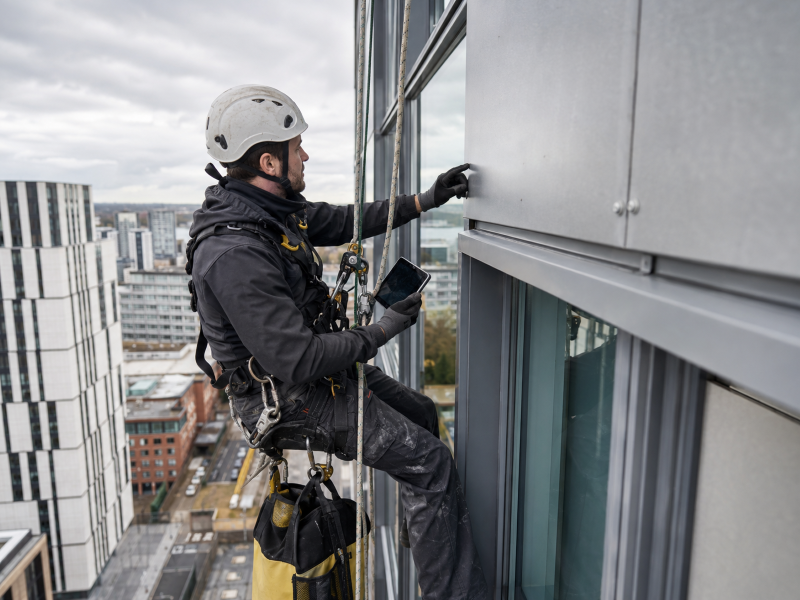
Rope access is a practical method for carrying out high-level building surveys where ductwork, risers, façades, rooflines, gutters, cladding, drainage routes, plant areas or structural features are difficult to inspect from the ground. For commercial building managers rope access can help identify defects earlier, reduce reliance on scaffolding, support maintenance planning and provide photographic evidence for asset records, compliance files and repair decisions.
High-level areas are often among the least visible parts of a commercial building, yet they can carry some of the most important maintenance risks.
An inaccessible riser, cracked section of render, blocked gutter outlet, loose flashing, displaced cladding panel or failing seal around a roofline may not be obvious from ground level. Over time, these issues can lead to fire risks, water ingress, staining, deterioration, falling material risks, internal damage and increased repair costs.
This is why using a rope access company has become an important option for commercial building managers, facilities teams, landlords, estate managers and property professionals.
Instead of waiting until a visible failure appears, a high-level survey allows difficult-access areas to be inspected closely and recorded clearly. The result is better information, better maintenance planning and a stronger understanding of building condition.
Rope Access FAQ Guide for High-Level Surveys
-
What is rope access?Rope access is a specialist access method that allows trained technicians to reach difficult or high-level areas using rope systems, harnesses and controlled working-at-height techniques. For building surveys, rope access can be used to inspect ductwork, risers, façades, rooflines, parapets, gutters, cladding, stonework, brickwork, windows, signage, high-level drainage and other areas that may be difficult to reach using ladders, mobile platforms or scaffolding. For commercial properties, the main advantage is targeted access. A rope access team can often reach the exact area that needs inspection without large-scale temporary structures.
-
How does rope access support high-level building surveys?Rope access supports high-level building surveys by allowing technicians to carry out close visual inspections of areas that cannot be assessed properly from the ground. A survey may include:
- Ductwork and riser hygiene and condition
- Façade condition checks
- Roofline inspections
- Gutter and drainage reviews
- Cladding observations
- Render and brickwork inspections
- Parapet checks
- High-level window and seal inspections
- Signage and fixing inspections
- Plant access route reviews
- Bird fouling and pest-related observations
- General building maintenance reporting
-
When should a commercial building manager arrange a rope access survey?A commercial building manager should consider a rope access survey when high-level areas are difficult to inspect, when defects are suspected or when maintenance planning requires clearer evidence. Common triggers include:
- Problems with kitchen extraction systems – odours or fan noise
- Water ingress reports
- Blocked or overflowing gutters
- Visible staining on external walls
- Loose or damaged cladding concerns
- Storm damage checks
- Insurance or landlord requirements
- Pre-refurbishment inspections
- Planned preventative maintenance reviews
- Façade condition concerns
- Bird fouling or pest issues at height
- Difficult-access drainage problems
-
Why use rope access instead of scaffolding for surveys?Scaffolding is useful for some projects, particularly where long-duration works, heavy materials or multiple trades are required. However, for targeted inspections, it may be more access than the task requires. Rope access can be a more practical option where a building manager needs a focused survey rather than a full working platform. The benefits may include:
- Faster mobilisation
- Reduced disruption to entrances and public areas
- Less impact on tenants, staff and visitors
- Lower visual impact on the building
- No need to scaffold areas that only need inspection
- More targeted access to specific defects
- Photographic evidence from close range
-
What areas can be surveyed using rope access?Rope access can be used for a wide range of high-level building survey tasks, depending on the building design, access strategy and site conditions. Common survey areas include:
- High-rise façades
- Office block elevations
- Retail building frontages
- Hotel façades
- Residential block exteriors
- Industrial buildings
- Plant decks
- Rooflines and parapets
- Gutters and downpipes
- Atriums and courtyards
- Ventilation ductwork and risers
- External signage areas
- Hard-to-reach ledges
- Bird fouling hotspots
-
Can rope access help identify early maintenance problems?Yes. One of the strongest uses of rope access is early defect identification. High-level defects often begin small. A strong odour or smoke in a kitchen, a blocked outlet, cracked seal, open joint, loose fixing or minor surface failure may not look urgent at first, but it can develop into a larger building issue if ignored. A rope access survey can help identify:
- Extraction system problems
- Blocked gutters
- Cracked render
- Loose fixings
- Open joints
- Damaged seals
- Corroded components
- Deteriorated brickwork
- Defective flashing
- Plant access issues
- Bird fouling build-up
- Water staining
- Signs of façade movement or deterioration
-
How does rope access support planned preventative maintenance?Planned preventative maintenance depends on good information. If building managers cannot see or inspect high-level areas properly, it becomes difficult to plan repairs, allocate budget or reduce future risk. Rope access helps create a clearer picture of building condition by providing close-up inspection and photographic evidence. This can support:
- Maintenance schedules
- Budget forecasting
- Repair prioritisation
- Contractor briefings
- Asset management records
- Condition reports
- Risk reviews
- Tenant communication
- Insurance discussions
- Future access planning
-
What should a rope access survey report include?A useful rope access survey report should help the building manager understand what was inspected, what was found and what action may be required. A strong report may include:
- Survey location and scope
- Areas accessed
- Areas not accessed and why
- Photographic evidence
- Defect observations
- Condition notes
- Maintenance recommendations
- Urgency of findings
- Suggested next steps
- Relevant access considerations
- Repair or cleaning recommendations
-
Can rope access surveys support compliance records?Yes. Rope access surveys can support compliance and maintenance records by providing documented evidence of inspection activity, access limitations, condition findings and recommended actions. For building managers, this is useful because high-level areas are often difficult to evidence properly. A written report with photographs can help show that areas have been reviewed and that maintenance decisions are being made from accurate information. This can support:
- Internal compliance files
- Planned maintenance records
- Landlord and tenant records
- Insurance evidence
- Health and safety documentation
- Contractor planning
- Audit trails
- Budget approvals
-
Is rope access suitable for live commercial buildings?Yes. Rope access is often suitable for live commercial buildings because it can reduce disruption compared with some traditional access methods. For offices, hotels, retail buildings, residential blocks, education estates, healthcare sites and industrial facilities, disruption matters. Building managers may need surveys completed without blocking entrances, affecting trading, closing large areas or disturbing tenants. Rope access can often be planned around:
- Business hours
- Quiet periods
- Out-of-hours access
- Public safety requirements
- Tenant communication
- Site-specific restrictions
- Weather conditions
- Operational priorities
-
Can rope access be used before cleaning or repair works?Yes. A rope access survey is often useful before cleaning, repair or maintenance works because it helps define the correct scope. Before works begin, a survey can identify:
- Which areas need cleaning
- Which defects need repair
- Whether gutters or drainage routes are blocked
- Whether bird fouling is present
- If risers or ductwork are clean and accessible
- Whether façade materials are fragile
- Whether access panels or fixings are required
- Whether further specialist advice is needed
- Whether scaffolding, mobile platforms or rope access will be most suitable
-
Can rope access support building cleaning surveys?Yes. Rope access can be used to inspect and plan high-level building cleaning, including ductwork, risers, façades, windows, stonework, brickwork, cladding, ledges and areas affected by staining or bird fouling. A survey can help decide whether the site needs:
- Ductwork or riser cleaning
- Façade cleaning
- DOFF cleaning
- Pressure washing
- Bird fouling removal
- Gutter cleaning
- High-level surface cleaning
- Graffiti removal support
- Pest control proofing
- Surface condition monitoring
-
Can rope access surveys help with pest control planning?Yes. Rope access can support pest control planning where birds are nesting, roosting or fouling at height. A high-level survey may identify:
- Ledges used by pigeons
- Roofline nesting areas
- Guano build-up
- Blocked drainage caused by bird debris
- Access points for proofing
- Areas suitable for bird netting
- Areas suitable for bird spiking
- Maintenance issues caused by pest activity
-
What makes a good rope access provider for building surveys?A good rope access provider should offer more than access at height. For commercial building surveys, facilities teams should look for:
- IRATA-qualified technicians
- Clear safety planning
- Strong communication
- Commercial building experience
- Practical reporting
- Photographic evidence
- Understanding of maintenance priorities
- Flexible scheduling
- Customer-focused service
- Ability to recommend next steps
-
How often should high-level building surveys be carried out?There is no single schedule that suits every building. The frequency of a rope access survey should depend on building age, design, exposure, previous defects, maintenance history, local environment and how critical the asset is to business operations. Buildings may need surveys:
- After severe weather
- Before planned maintenance
- Before refurbishment
- After reported leaks
- As part of annual maintenance planning
- Before external cleaning
- Before pest proofing works
- When façade defects are suspected
- As part of estate condition reviews
-
Why is rope access valuable for commercial building managers?For commercial building managers, rope access provides a practical way to see the parts of a building that are often missed. It helps answer important questions:
- Is the ductwork or riser accessible?
- Is the façade deteriorating?
- Are the gutters blocked?
- Are there loose fixings?
- Is bird fouling causing damage?
- Are drainage routes working properly?
- Is water entering the building from high level?
- Do we need repair, cleaning or further investigation?
- Can we avoid unnecessary scaffolding?
-
When should I call Rope Access 24 Seven?If you need a high-level building survey, difficult-access inspection or practical advice on the condition of your commercial property, Rope Access 24 Seven can help. Our rope access services support commercial building managers, facilities teams, landlords, property managers and asset managers across the UK. Our services can support:
- High-level building surveys
- Façade inspections
- Roofline inspections
- Gutter and drainage checks
- Cladding observations
- Building maintenance inspections
- Ductwork and riser access
- Access panel installations
- Pest control surveys at height
- Bird netting and spiking advice
- DOFF cleaning surveys
- High-level cleaning assessments
- Photographic reporting
- Planned preventative maintenance
Contact our expert Operations Team to discuss rope access inspections and cleaning or to arrange a free site survey.
📞 Call our Operations Team: 0203 640 8247 to find out more.
📧 Email: info@24sevengroup.co.uk
For information about our full range of services use these helpful website links Rope Access Ductwork, Industrial Rope Access Services, Rope Access Building Maintenance, Doff Cleaning and Pest Control.
Follow us on Instagram, Facebook and Linked In.