
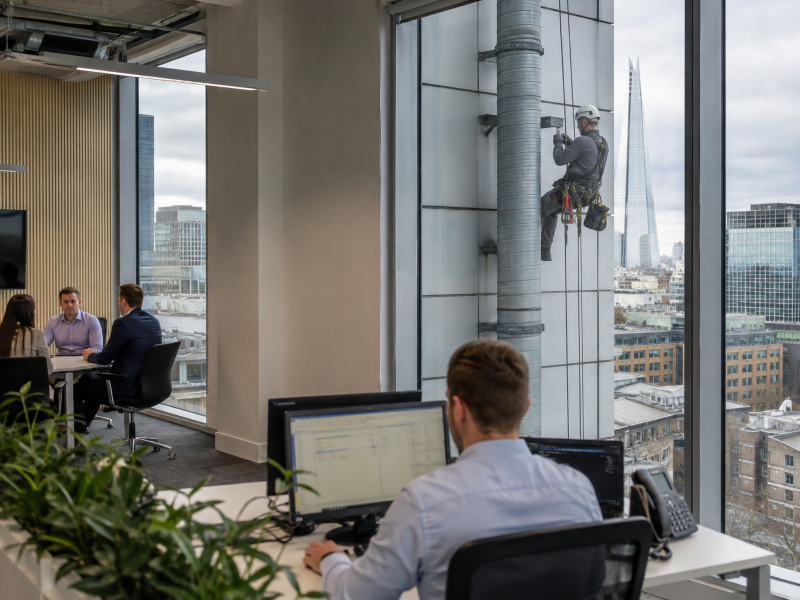
Cleaning ventilation and extract ductwork and risers inside an occupied building requires more than simply gaining access to the system. Facilities managers, building managers and estates teams must balance hygiene, fire-risk management and maintenance requirements against the practical realities of tenants, employees, customers, residents and other building users remaining on site. This becomes particularly challenging where ductwork travels through vertical risers, high-level plant areas, external façades or restricted parts of the building. Professional rope access ductwork services can provide a targeted way to reach these difficult sections while reducing reliance on extensive scaffolding or powered access. When the project is properly planned, inspection, cleaning and access-panel installation can often be coordinated around normal building operations.
This FAQ guide explains how rope access ductwork cleaning can be managed within occupied commercial premises, where disruption may occur and what facilities teams should expect from the planning and reporting process.
Rope Access Ductwork FAQ for Occupied Buildings
-
Can a building remain occupied during a rope access ductwork service?In many situations, yes. The building itself can often remain occupied while rope access ductwork inspections or cleaning takes place, provided suitable controls are established. However, the particular ventilation or extract system being worked on may need to be isolated temporarily. The affected kitchen, plant area, tenant space or process may therefore require a planned shutdown even if the wider building remains operational. The project may need to consider:
- System isolation
- Working hours
- Tenant communication
- Noise
- Dust and debris containment
- Access restrictions
- Pedestrian segregation
- Roof and plant-room access
- Fire-alarm interfaces
- Kitchen operating periods
- Deliveries
- Waste removal
- Recommissioning
-
Why is a rope access ductwork service useful in occupied buildings?Traditional access methods can sometimes create as much disruption as the maintenance itself. Scaffolding may affect entrances, loading bays, pavements or customer areas. Mobile elevated work platforms can require substantial ground-level space, while internal towers may interrupt circulation routes. Rope access ductwork services use a more targeted access system where the building configuration allows it. This can be particularly useful for:
- Vertical ventilation risers
- External extract ductwork
- High-level plant areas
- Restricted shafts
- Roof-level duct routes
- Façade-mounted ductwork
- Ducts positioned above service areas
- Locations where ground space is limited
-
Does the ventilation system have to be switched off during rope access ductwork cleaning?Usually, the section being cleaned will need to be safely isolated. Running fans while technicians are opening access panels or cleaning internal duct surfaces is dangerous for the technician and can create uncontrolled airflow, contamination movement and mechanical hazards. The appropriate isolation procedure depends on the system. It may involve:
- Fan shutdown
- Electrical isolation
- Lock-off procedures
- Confirmation that connected equipment is not operating
- Coordination with building-management systems
- Kitchen or process shutdowns
- Fire-alarm or suppression-system considerations
- Authorised recommissioning
-
How can rope access ductwork cleaning minimise disruption to tenants?The strongest approach is usually phased planning. Rather than treating the building as one large work area, the contractor can divide the project into manageable zones. For example, rope access ductwork cleaning may be scheduled:
- Outside normal office hours
- Between restaurant services
- Overnight
- During planned production downtime
- During weekends
- Around hotel occupancy
- During school or university holidays
- One riser at a time
- One tenant zone at a time
-
Which occupied buildings are suitable for rope access ductwork cleaning?The technique can be used across many commercial environments where difficult-access ductwork is present. Examples include:
- High-rise offices
- Hotels
- Restaurants
- Mixed-use developments
- Shopping centres
- Hospitals
- Care facilities
- Universities
- Schools
- Commercial kitchens
- Residential blocks
- Industrial premises
- Food-production sites
- Public buildings
-
Is rope access ductwork cleaning suitable for commercial kitchen extract systems?Yes, where rope access is the appropriate access method. Commercial kitchen extract systems can present particular challenges because ductwork may travel vertically through several floors before terminating at roof level. Grease passing through the filtration system can accumulate inside the ductwork over time. UK Fire Service advice highlights that kitchen ducting should be cleaned regularly because accumulated grease can ignite and allow smoke and fire to spread elsewhere in the building or to neighbouring premises. A rope access ductwork programme may allow technicians to reach external or high-level riser sections that conventional cleaning teams cannot safely access. The scope can include inspection, cleaning and installation of access panels where existing openings are insufficient.
-
What happens if previous contractors could not access the whole system?This should be clearly identified. If parts of a ventilation or extract system could not be reached, the maintenance records should not imply that those areas were inspected or cleaned. Facilities managers should review previous documentation for references such as:
- No access
- Unable to inspect
- Access panel required
- High-level section inaccessible
- Riser not accessed
- External section excluded
- Further access required
-
Can rope access ductwork technicians install new access panels?Yes, where this forms part of the agreed scope and the installation is appropriate for the ductwork. Access panels can be particularly important around:
- Changes in direction
- Vertical risers
- Long duct runs
- Fans
- Dampers
- Branches
- Restricted shafts
- External ductwork
- Areas repeatedly recorded as inaccessible
-
How are building occupants protected during the work?Occupied-building projects require clear separation between the work activity and building users. Controls may include:
- Temporary exclusion zones
- Barriers
- Warning signage
- Alternative pedestrian routes
- Access marshals where appropriate
- Controlled roof access
- Secure storage of tools
- Tool tethering
- Debris containment
- Restricted plant-room access
- Cleaning outside high-footfall periods
- Communication with tenants or departments
-
Will rope access ductwork cleaning create dust or debris inside the building?It can, depending on the contaminant and cleaning method, which is why containment is important. Grease, dust and other deposits removed from ductwork must be prevented from spreading into occupied areas. Controls may include:
- Sealed access points
- Containment sheeting
- Local collection equipment
- Negative-pressure arrangements where appropriate
- Mechanical extraction
- Waste bags or collection systems
- Cleaning from controlled access positions
- Post-work housekeeping
-
What if the building relies on the ventilation system while occupied?This requires careful planning. UK guidance states that employers must ensure adequate ventilation in enclosed workplaces. Where a mechanical ventilation system needs to be shut down for maintenance, facilities teams should assess whether occupants can safely remain in the affected area during that period. Possible solutions may include:
- Cleaning individual zones sequentially
- Working outside occupancy hours
- Using temporary ventilation arrangements where appropriate
- Restricting access to affected areas
- Reducing shutdown duration
- Coordinating work with building-management systems
-
Can rope access ductwork cleaning be completed overnight?Yes, and overnight working can be particularly useful for heavily occupied commercial buildings. Hotels, restaurants, shopping centres, offices and mixed-use developments may benefit from completing disruptive activities when footfall is lower. Overnight rope access ductwork work can help facilities managers:
- Avoid peak occupancy
- Coordinate kitchen shutdowns
- Reduce public exclusion requirements
- Maintain daytime deliveries
- Protect tenant access
- Limit disruption to customer-facing areas
- Allow systems to be recommissioned before normal operations resume
-
Does occupied-building cleaning affect fire safety arrangements?Potentially, particularly where kitchen extract systems, fire alarms or other building systems are involved. The project should identify whether the work affects:
- Fire compartments
- Fire dampers
- Fire-alarm detection
- Suppression systems
- Emergency routes
- Fire doors
- Kitchen operations
- Plant shutdowns
-
How does rope access ductwork cleaning work around restaurants and hotels?Hospitality sites require particularly careful scheduling because kitchens and guest areas may operate for long periods. A hotel may have:
- A breakfast kitchen
- Restaurant kitchens
- Room-service facilities
- Banqueting kitchens
- Laundry extraction
- Multiple roof-level plant areas
- Vertical extract risers
-
How can rope access ductwork cleaning work in offices?Office buildings often present different challenges. The main priorities may include:
- Maintaining tenant access
- Avoiding disruption to meetings
- Managing rooftop work
- Controlling noise
- Coordinating HVAC shutdowns
- Protecting reception and loading areas
- Working around security restrictions
-
How should I communicate the work to occupants?Clear communication reduces disruption. Before the project begins, building users may need information about:
- Dates
- Working hours
- Areas affected
- Temporary closures
- Ventilation shutdowns
- Noise
- Alternative routes
- Kitchen closures
- Access restrictions
- Expected completion times
-
Can compliance inspections be completed at the same time?Yes. A planned visit may combine:
- Internal duct inspection
- Deposit assessment
- Cleaning
- Photographic recording
- Access-panel installation
- External duct condition checks
- Riser inspection
- Fan or plant observations
- Other appropriate high-level building observations
-
What should happen after cleaning is complete?The system should be checked before it is returned to normal operation. This may include confirming that:
- Cleaning equipment has been removed
- Access panels have been secured
- Waste has been removed
- The duct route is clear
- Fans are ready for recommissioning
- Temporary controls have been removed
- Affected areas are safe to reopen
- Photographic evidence is complete
- Outstanding defects have been recorded
-
What should the rope access ductwork service report cover?The dated cleaning report and certification should accurately reflect the sections that were actually accessed, inspected and cleaned during the works. It should not imply that inaccessible areas were completed. Facilities managers may retain these documents as part of their compliance, maintenance and insurance documentation, so the scope needs to be precise. Supporting information may identify:
- The system cleaned
- Date of work
- Areas accessed
- Sections cleaned
- Access panels used or installed
- Remaining inaccessible sections
- Relevant observations
- Photographic evidence
-
Why is photographic reporting important?Photographs provide facilities managers with evidence from areas they may never physically see themselves. This is particularly useful with a rope access ductwork service because the technician may be working several storeys above ground or inside a restricted riser. Photographs can demonstrate:
- Pre-clean condition
- Grease or dust accumulation
- Access locations
- Internal duct condition
- Cleaning progress
- Completed surfaces
- Access-panel installations
- Defects discovered
- Any remaining inaccessible areas
-
Can rope access ductwork cleaning be combined with building maintenance?Often, yes. The same rope-access mobilisation may provide access to other high-level assets near the duct route. Depending on the agreed scope, this could include:
- External duct supports
- Façade condition observations
- Sealant defects
- Gutters
- Roofline components
- Bird-proofing systems
- External plant
- Building cleaning
-
Is rope access always the best method?No. The correct method depends on the building and work involved. Scaffolding, mobile or fixed platforms or other access systems may be more suitable where:
- Heavy equipment is required
- Several operatives need prolonged access
- The work area is extensive
- Rope anchorage cannot be established safely
- The task involves substantial structural work
-
What should facilities managers ask before appointing a contractor?Before commissioning a rope access ductwork service in an occupied building, consider asking:
- Which areas of the system will be accessed?
- Will any sections remain inaccessible?
- Does the ventilation system need to be isolated?
- How long will each shutdown last?
- Can work be phased?
- Can it be completed outside normal operating hours?
- What exclusion zones will be required?
- How will contamination be contained?
- Are additional access panels required?
- What documentation will be provided?
- What rescue arrangements are in place?
- How will the system be recommissioned?
-
Why choose Rope Access 24 Seven?Rope Access 24 Seven provides specialist access services for commercial buildings across the UK. Our capabilities include:
- Duct and riser hygiene
- Compliance and condition inspections
- Access-panel installations
- Building maintenance
- DOFF cleaning
- Pest-control solutions at height
Arrange a free rope access ductwork survey
Occupied buildings do not necessarily have to close simply because difficult-access ductwork requires inspection or cleaning.
A professional survey can establish:
- Where the ductwork runs
- Which sections are difficult to access
- Whether rope access is suitable
- Where access panels are needed
- What areas require isolation
- How work can be phased
- Which operational periods should be avoided
- What documentation will be provided
Contact our expert Operations Team to discuss rope access ductwork inspections and cleaning for an occupied commercial building or to arrange a free site survey.
📞 Call our Operations Team: 0203 640 8247 to find out more.
📧 Email: info@24sevengroup.co.uk
For information about our full range of services use these helpful website links Rope Access Ductwork, Industrial Rope Access Services, Rope Access Building Maintenance, Doff Cleaning and Pest Control.
Follow us on Instagram, Facebook and Linked In.