
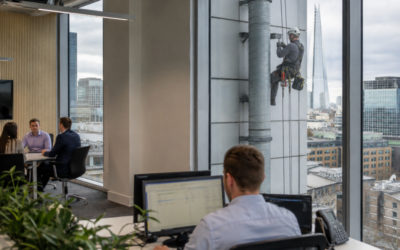
Rope Access Ductwork FAQ for Occupied Buildings
Cleaning ventilation and extract ductwork and risers inside an occupied building requires more than simply gaining access to the system. Facilities managers, building managers and estates teams must balance hygiene, fire-risk management and maintenance requirements against the practical realities of tenants, employees, customers, residents and other building users remaining on site. This becomes particularly challenging where ductwork travels through vertical risers, high-level plant areas, external façades or restricted parts of the building. Professional rope access ductwork services can provide a targeted way to reach these difficult sections while reducing reliance on extensive scaffolding or powered access. When the project is properly planned, inspection, cleaning and access-panel installation can often be coordinated around normal building operations.
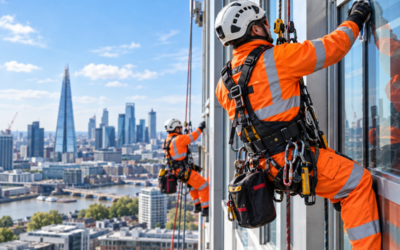
Industrial Rope Access Services FAQs
For commercial building managers, facilities teams, landlords and property professionals, difficult access can turn relatively straightforward maintenance, cleaning or inspection work into a much larger project. Industrial rope access services provide a specialist method of reaching high-level, confined and otherwise challenging areas without automatically relying on extensive scaffolding or heavy access equipment.
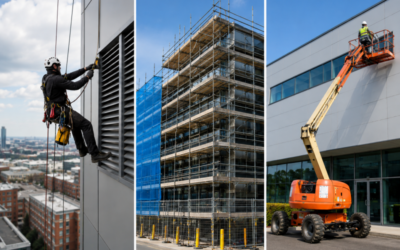
How to Compare Industrial Rope Access Services with Alternative Access Methods
Industrial rope access services provide a flexible access method for commercial, industrial and difficult-access building works where scaffolding or mobile elevated work platforms (MEWPs) may be costly, disruptive or impractical. Scaffolding may still be suitable for long-duration projects and heavy works, while MEWPs can be useful where ground conditions and reach are suitable. However, for inspections, ductwork and riser access, façade maintenance, bird control, cleaning, compliance audits and targeted repairs, rope access can often reduce mobilisation time, ground-level disruption and access costs.
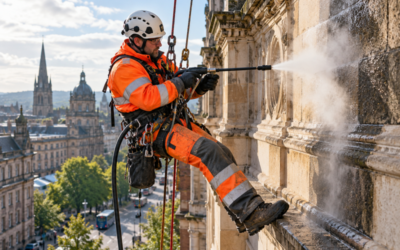
Rope Access DOFF Cleaning FAQs
For facilities managers, building managers and property teams responsible for high-level façades, sensitive masonry and difficult-to-reach exterior surfaces, choosing the right cleaning method is important. Rope access DOFF cleaning combines specialist high-level access with a controlled cleaning process, allowing technicians to reach areas that might otherwise require scaffolding or powered access. Rope Access 24 Seven provides DOFF cleaning alongside wider rope access cleaning, inspection and building maintenance services for commercial properties across the UK.
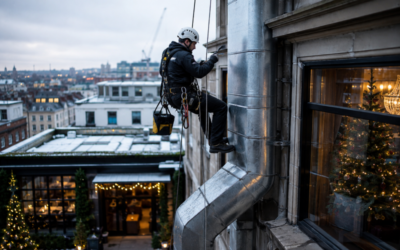
Rope Access Ductwork FAQ Guide for Christmas Kitchen Extract Readiness
Christmas can place some of the greatest operational pressure of the year on commercial kitchens, making rope access ductwork services particularly valuable where extract systems include high-level ducts, external routes or vertical risers that are difficult to inspect and clean. Hotels, restaurants, pubs, entertainment venues and hospitality sites may extend service hours, increase covers and operate cooking equipment for longer periods, often with fewer opportunities for maintenance downtime.
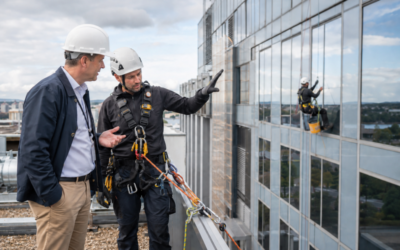
How to Choose the Right Rope Access Services for a Commercial Building
Rope access services help facilities managers and building managers inspect, clean, maintain and repair difficult-to-reach areas of commercial buildings without relying on scaffolding, cranes or mobile platforms. The right provider should be able to support duct and riser hygiene, access panel installations, compliance audits, high-level building maintenance, bird control solutions and fall protection system installation, maintenance and inspection. Choosing the right team means looking beyond access alone and selecting a contractor that understands building compliance, reporting, safety and long-term asset management.
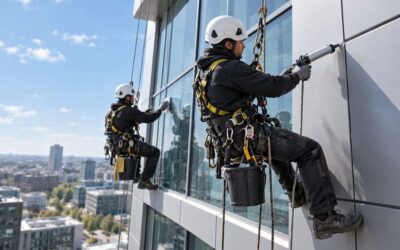
Rope Access Building Maintenance FAQ’s
Rope access building maintenance provides a practical way to inspect, repair, clean and maintain areas of commercial buildings that can be difficult to reach using conventional access methods.

Rope Access Building Maintenance – Fall Protection Compliance FAQ Guide
Facilities managers and health and safety directors often inherit roof safety systems with limited documentation, expired inspection tags or no clear record of who installed them. This creates an immediate question: can contractors continue using the roof anchors, cable lifelines and fall-protection equipment, or must the systems be taken out of service until they have been inspected? This rope access building maintenance FAQ explains the usual inspection lifecycle for single-point roof anchors and horizontal cable lifelines. It also examines the standards, records and practical checks that duty holders should consider when managing new, inherited or ageing commercial buildings.
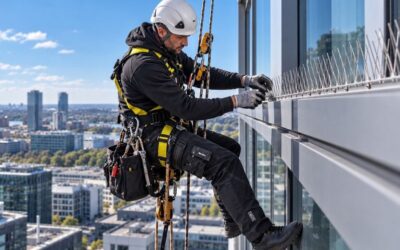
Rope Access Pest Control FAQ’s
Rope access pest control provides a practical way to install bird deterrents, inspect problem areas and carry out pest-related works in high-level or difficult-to-access parts of commercial buildings.
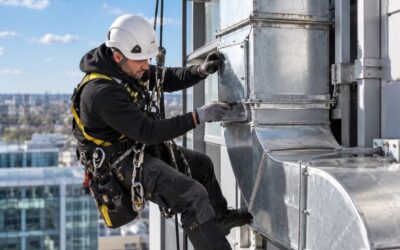
Rope Access Ductwork FAQ’s
Rope access ductwork services provide a practical way to inspect, clean, maintain and install ductwork in areas that are difficult to reach using conventional access methods.
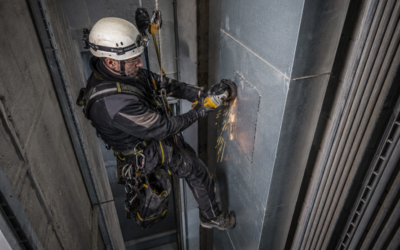
How to Make Ductwork Accessible with Rope Access Solutions
Rope access solutions help facilities teams solve “no access” or “failed compliance” observations by creating safe access to ductwork and risers that cannot be reached by standard methods. IRATA-qualified technicians can inspect hidden duct routes, map compliance blind spots, cut access openings into ductwork in difficult-access service voids and install suitable airtight, fire-rated access panels so future inspection, cleaning and reporting can be completed properly.

Rope Access Facilities Management FAQ for Multi-Discipline Support
For busy facilities managers, access is often one of the biggest barriers to effective building maintenance. Shopping centres, hospitals, office blocks, council buildings, government facilities and complex commercial estates all have areas that are difficult to reach. These may include vertical risers, high-level façades, rooflines, plant areas, ledges, service voids, ductwork routes and awkward external elevations. Traditionally, each task might involve a different contractor, a different access method and a different set of risk assessments. One contractor may attend for rope access ductwork inspections, another for bird netting, another for façade cleaning and another for access panel installation. This fragmented approach can increase cost, delay works and create unnecessary administration. Rope access facilities management offers a more coordinated approach.
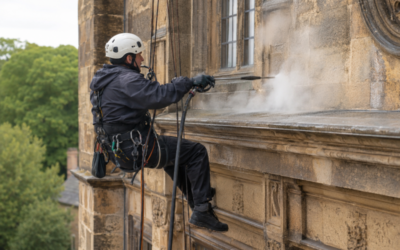
How to Use Rope Access Building Cleaning to Restore Facades
Rope access building cleaning allows facilities managers, estate surveyors and commercial landlords to clean heritage brick, stonework and sensitive facades without relying on large scaffolding structures or aggressive pressure washing. By combining professional rope access techniques with DOFF steam cleaning, technicians can reach difficult elevations, clean delicate surfaces at low pressure and remove carbon staining, algae, moss and atmospheric pollution while helping protect fragile masonry.
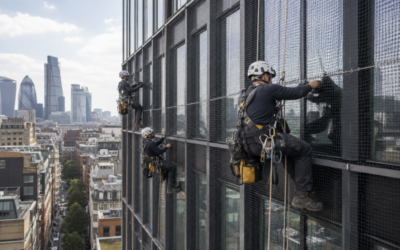
How to Use Rope Access Netting Installation for Bird Control
Rope access netting installation is the use of specialist rope access techniques to install bird netting on difficult-to-reach areas of a building. It is often used where pigeons or gulls are nesting, roosting or fouling on high-level ledges, windowsills, façades, rooflines, plant areas, balconies, lightwells, signage or architectural features. A professional bird control solution may also include guano cleaning, surface preparation, bird spiking and wider bird proofing measures.

Using Rope Access Technicians for Confined Spaces – FAQ Guide
If you manage a large commercial property, hospital, university estate, multi-storey block or industrial building, some of your most important maintenance risks may sit completely out of sight. Behind walls, above ceilings and deep inside the building structure, ventilation systems often pass through risers, service voids, internal shafts and restricted spaces. These areas can be difficult to reach, poorly ventilated and unsuitable for standard maintenance access. When hidden ventilation ductwork needs cleaning, inspection, repair planning or access panel installation, conventional access may not be safe or practical. This is where using rope access technicians for confined space rope access services can provide a specialist solution.

The 60-Second FAQ Guide to Rope Access Services
For many commercial building managers, rope access is still misunderstood. Some assume it requires cranes, heavy plant, long road closures or complex scaffolding arrangements. In reality, professional rope access services can often provide a faster, lighter and less disruptive way to inspect, clean, maintain and protect difficult-to-reach areas of a building.

FAQ Guide – Avoid Insurance Risk With a Rope Access Contractor
High-level building maintenance is often delayed because defects are difficult to see, difficult to reach and difficult to budget for. For commercial landlords, institutional property investors, retail park asset managers, residential block managers and facilities teams, this can create a serious hidden risk. A cracked façade joint, blocked gutter, loose panel, corroded fixing, damaged seal, bird fouling issue or high-level staining may appear minor from ground level. However, if left unchecked, these problems can affect safety, building condition, tenant confidence, public-facing appearance and insurance discussions. The issue is not only whether a building looks clean. It is whether the property owner can demonstrate that the building has been inspected, maintained and managed responsibly. A professional rope access contractor can help property teams access difficult areas safely, inspect high-level risks, carry out planned maintenance and provide documented evidence of the building’s condition.

How a Rope Access Service Provider Supports BREEAM Goals
A rope access service provider can support BREEAM, ESG and net-zero objectives by reducing the need for scaffolding, diesel-powered access equipment and heavy transport logistics during building maintenance. Industrial rope access uses lightweight, reusable equipment and human-powered access methods, helping facilities managers lower disruption, reduce material use and minimise the hidden carbon impact of external estate maintenance.

Other Specialist Cleaning Divisions of 24 Seven Group


